AR Journal
Choosing the Right Thinner: A Guide for Industrial and Home Use
To achieve high-quality painting results, it’s not just the paint that matters — choosing the right thinner is equally important. Thinner regulates the paint’s consistency, cleans tools, and ensures a smooth finish. However, not every thinner is suitable for every job — industrial and home uses have different requirements.
In this guide, we’ll explain which thinner types are used where, the best options for industrial and household applications, and what to consider when choosing the right thinner.
🔍 What Is Thinner Used For?
-
Diluting paint
-
Cleaning brushes, spray guns, and tools
-
Removing paint stains
-
Helping paint spread evenly across surfaces
🧱 Industrial-Grade Thinners
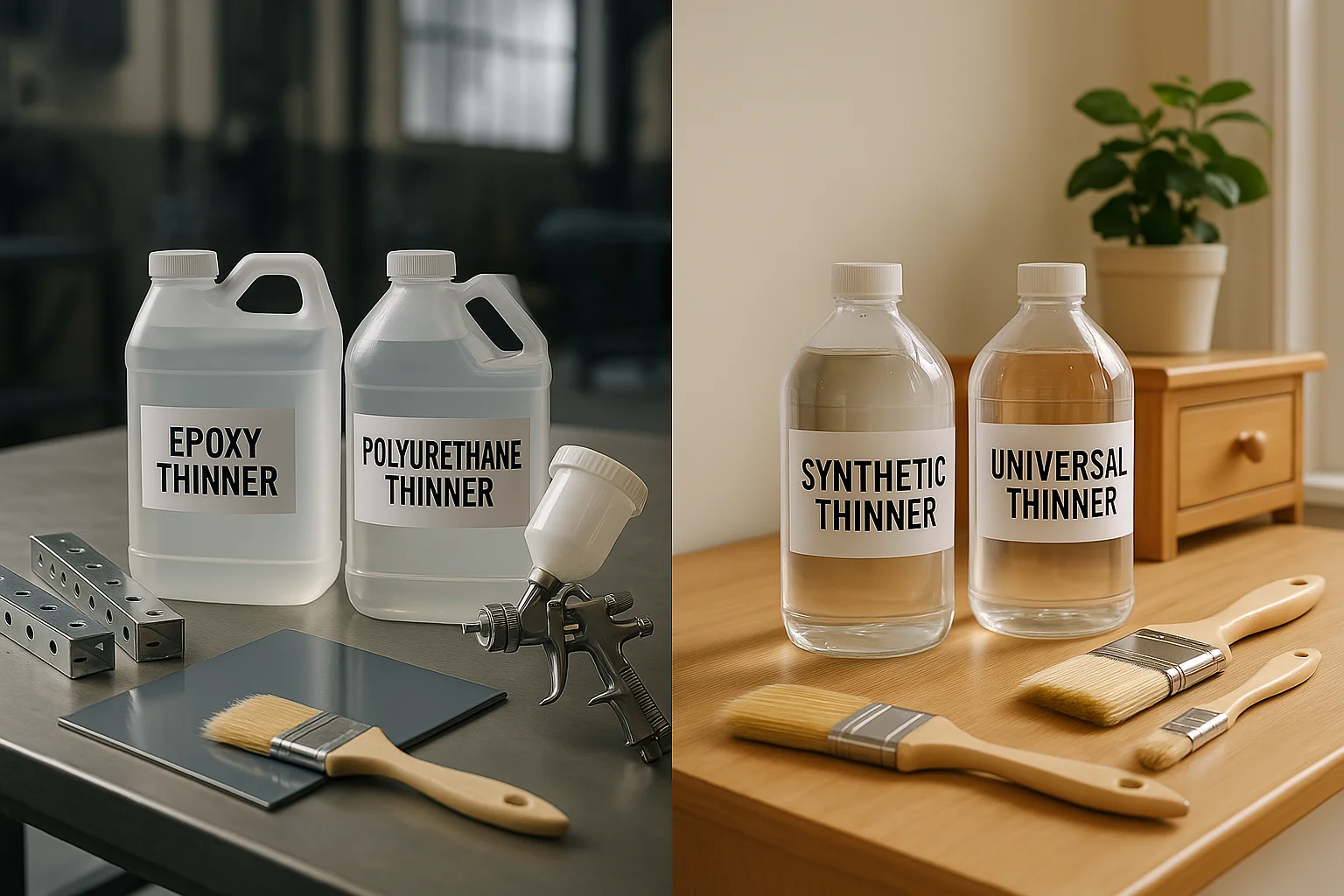
1. Cellulosic Thinner
Used for: Automotive painting, metal surfaces, fast-drying applications
Advantages: Evaporates quickly, ideal for rapid surface drying
Note: Has a strong odor and high volatility
2. Epoxy Thinner
Used for: Epoxy-based paints, floor coatings, machine parts
Advantages: Excellent chemical resistance and strong adhesion
Note: Should only be used with epoxy paints
3. Polyurethane (PU) Thinner
Used for: Two-component polyurethane paint systems
Advantages: High UV and heat resistance
Note: Mixing ratios must be followed precisely
🏠 Thinners for Home Use
1. Synthetic Thinner
Used for: Home wall paints, radiators, furniture
Advantages: Softer odor, easier to use
Note: Has a longer drying time compared to cellulosic thinner
2. Universal Thinner
Used for: Small repair work and tool cleaning
Advantages: Affordable, multipurpose use
Note: May not be fully compatible with every paint type
📌 What to Consider When Choosing the Right Thinner
-
Type of paint: For example, do not use cellulosic thinner with epoxy paint.
-
Work environment: For indoor areas, choose low-odor thinners.
-
Drying time: If fast drying is required, cellulosic thinner is ideal.
-
Safety standards: Always prefer certified brands with clear labeling and safety data sheets (MSDS).
⚠️ Safety Tips When Using Thinner
-
Wear gloves, masks, and safety goggles during use.
-
Keep away from open flames and heat sources.
-
Close the container tightly after use.
-
Store out of reach of children.
🛒 Where to Buy
For high-quality and original thinner products, visit Archemical.co.
Our catalog includes synthetic, cellulosic, epoxy, and PU thinners. You can also contact us for technical support and expert consultation.
🔚 Conclusion
Choosing the right thinner directly affects the outcome of your painting projects.
While universal and synthetic thinners are ideal for small home tasks, cellulosic, epoxy, and PU thinners are essential for industrial applications.
Always consider the paint type, working environment, and safety standards to achieve professional and lasting results.